Greenville, SC Whole-Home Remodeling: Structural Reality Before Finish Decisions
Why Greenville Homeowners Get Surprised Mid-Project — and How to Avoid It
Many Greenville homeowners assume that whole-home remodeling is primarily a design process — choosing layouts, selecting fixtures, deciding on finishes. What they discover once walls open is that the real decisions were structural and mechanical, and those conditions weren't visible until demolition revealed them. Greenville's housing stock spans from pre-1940 properties near the Augusta Road and Overbrook areas to 1970s and 1980s construction in the city's suburban corridors — each decade presenting its own set of conditions hidden behind finished surfaces.
Talon Home Renovations approaches whole-home and multi-room remodeling in Greenville by assessing structural and mechanical conditions before committing to a finish schedule. That means identifying which walls are load-bearing, determining whether existing HVAC and electrical service can support the renovated layout, and sequencing trade work in the order the project actually requires rather than the order that's most convenient to schedule.
When that sequencing is done correctly, the visible result — updated floors, renovated kitchen and bathrooms, reconfigured living spaces — sits on mechanical and structural work that will last. That's what makes a whole-home renovation an investment rather than a project that generates its own follow-up repairs within five years.
What Makes Greenville Whole-Home Remodeling Different
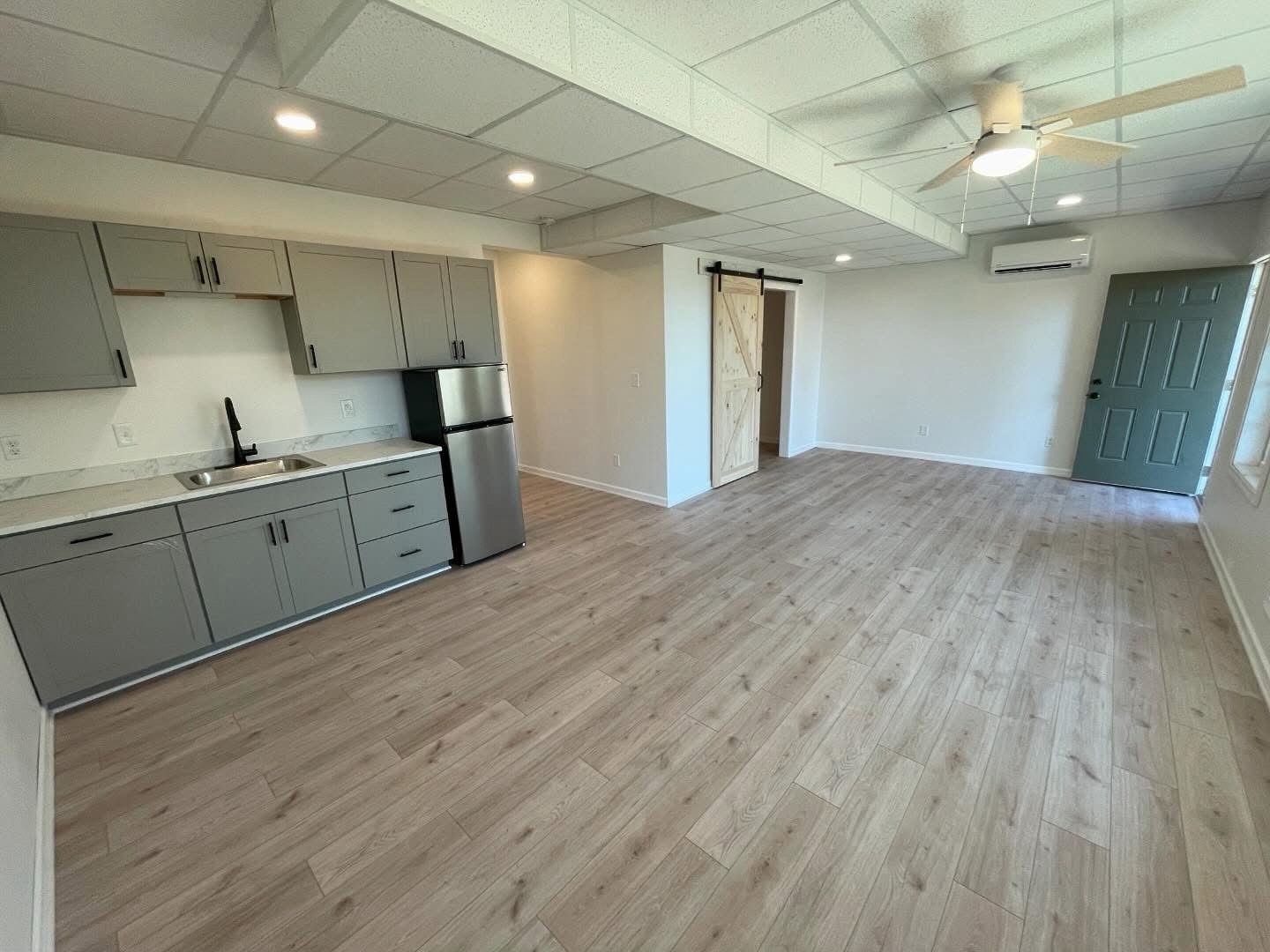
The difference in whole-home remodeling outcomes in Greenville comes from decisions made at the structural and mechanical phase — before finish materials are ordered and before trade scheduling locks in a sequence that becomes difficult to change.
- When walls are removed for open floor plan conversions without structural assessment, load paths are disrupted — resulting in settlement, cracking at finish materials, and costly remediation after the fact
- If multi-trade permits aren't pulled for Greenville County projects, inspections can't occur at the right phase — rough-in work gets enclosed before it's verified, requiring finished surfaces to be opened for corrections
- When HVAC and electrical panel capacity isn't evaluated during design, mid-project scope changes add cost that exceeds what proper planning would have required at the start
- Depending on whether a Greenville property predates 1978, lead paint and asbestos assessment determines which demolition methods and precautions apply before any work begins
- If subfloor levelness isn't corrected to within 3/16 inch over 10 feet before tile installation, grout failure follows regardless of tile quality, adhesive brand, or installer experience
Schedule your whole-home remodeling consultation in Greenville, SC with a contractor who documents structural and mechanical findings before locking in a finish timeline — so the scope reflects what your property actually requires.
Choosing the Right Remodeling Contractor in Greenville
Greenville's renovation market has expanded alongside the city's growth, and the range of contractors operating in it has widened accordingly. Choosing the right firm for whole-home remodeling comes down to how they handle what's behind the walls — not how polished the estimate looks before any demolition has occurred.
- Permit history for multi-trade residential projects in Greenville County is a direct indicator of a contractor's accountability to inspection standards — verify this before signing
- Project phasing plans that account for occupied living during active renovation demonstrate experience with complex residential scopes rather than projects where the home is fully vacated
- References for completed whole-home projects — not just individual room renovations — confirm the coordination capacity that multi-phase work actually requires
- Scope documentation that separates demolition, rough-in, mechanical, and finish phases into distinct line items prevents mid-project change order disputes that arise from combined-phase estimates
- Greenville properties in the Augusta Road, Overbrook, and North Main corridors often require asbestos and lead assessment before demolition — contractors who skip this step transfer a compliance risk to the homeowner
Get your free estimate for whole-home remodeling in Greenville, SC from a team that outlines structural and mechanical conditions first — so the finish schedule is built on an accurate picture of your property, not assumptions.