
10+
Years Of Experience
Outdoor Spaces That Extend Your Season
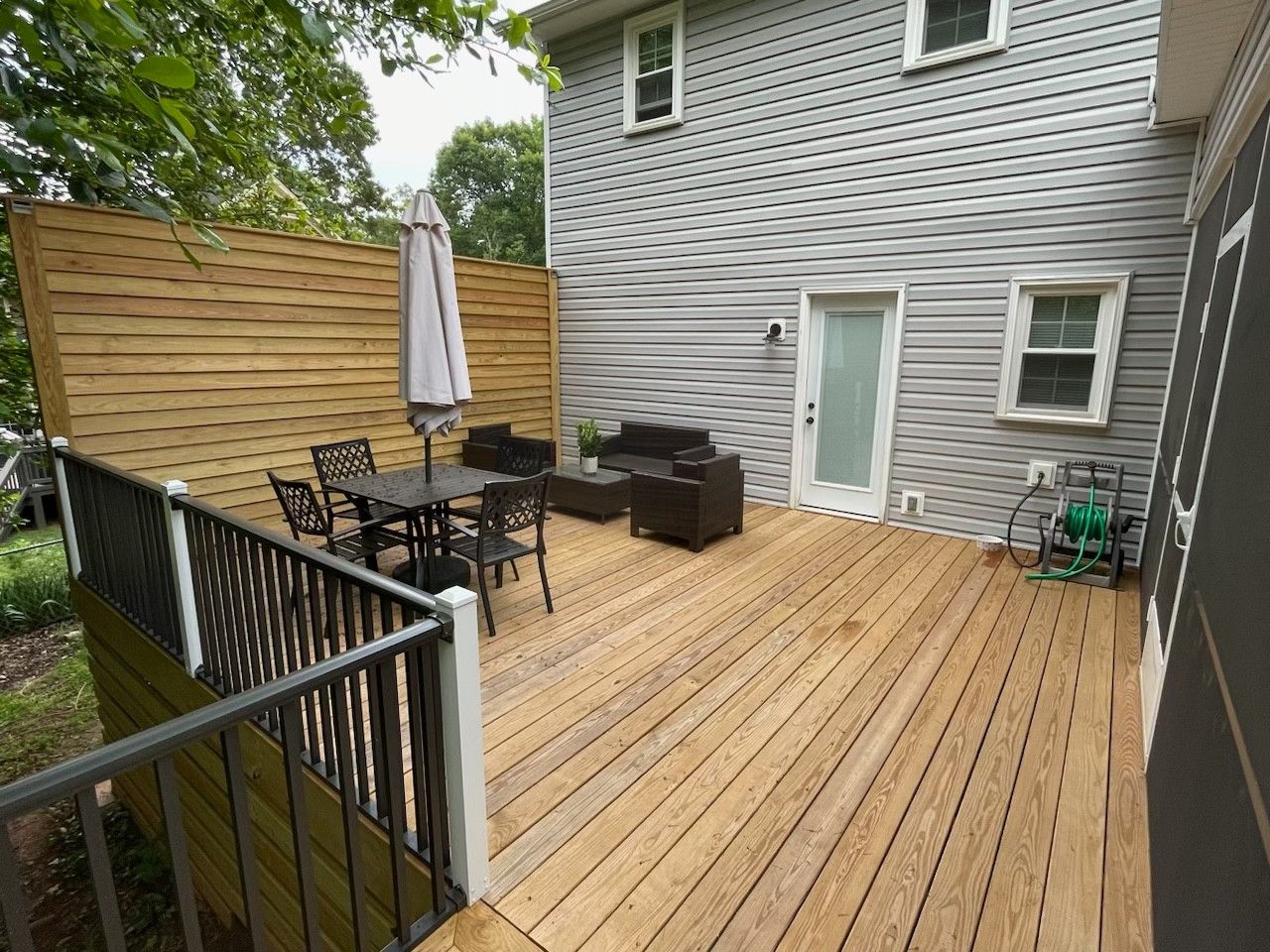
Outdoor Living: Decks, Porches & Screen Rooms in Taylors, SC for homeowners wanting functional year-round outdoor areas
Taylors, SC's climate allows outdoor living for much of the year, but unshaded decks become unusable during summer afternoons, and open porches fill with pollen in spring or insects during evening gatherings. Talon Home Renovations builds covered porches, screened-in rooms, and elevated decks that extend usable outdoor space across seasons by providing shade, ventilation, and protection from weather and pests. Custom designs match the home's existing architecture—roofline pitch, trim details, siding profiles—so additions look intentional rather than tacked on, which matters both for curb appeal and for maintaining property value in Taylors, SC, Anderson, SC, Greenville, SC, Spartanburg, SC, Simpsonville, SC, and Greer, SC, where consistency in design affects buyer perception.
Deck construction involves setting footings below frost line to prevent seasonal movement, framing with treated lumber or composite materials rated for ground contact and moisture exposure, and installing decking boards with proper spacing for drainage and thermal expansion. Screened rooms require structural posts that support roof loads, framing systems that hold screen panels taut without sagging, and door assemblies that close securely to keep insects out during use.
Schedule an outdoor project consultation to review site conditions, discuss design options that complement your home's style, and evaluate material choices based on maintenance preferences.
Why Structural Integrity Matters for Elevated Decks
Decks attached to the home's rim joist carry significant live loads when occupied by people and furniture, so ledger board attachment requires through-bolts or structural lag screws at intervals specified by building codes, and flashing above the ledger must prevent water from wicking into the band joist and rotting the home's framing. Composite decking resists splintering and fading compared to natural wood, but the underlying framing still uses treated lumber because structural members need strength that composites don't provide, and proper joist spacing prevents the bouncy feel that signals inadequate support.
Once construction finishes, you'll notice that covered porches remain comfortable during midday heat because the roof blocks direct sun, that screened rooms allow you to enjoy evenings outside without applying insect repellent every hour, and that elevated decks provide outdoor living space even on sloped lots where ground-level patios aren't feasible. These spaces also support entertaining and family use in ways that small concrete stoops or basic back steps don't, which changes how you use the property during mild weather months that make up most of the year in the upstate.
Outdoor living additions increase home value by adding functional square footage that buyers view as essential rather than optional, particularly in markets where outdoor entertaining defines the local lifestyle. Well-built decks and screened porches also last decades when constructed with weather-resistant materials and proper drainage, avoiding the sagging and rotting that require premature replacement.
What Homeowners Want to Know About Outdoor Projects
Building outdoor living spaces raises questions about materials, design integration, and how these structures perform over time in local weather conditions.
What material holds up best for decking in the upstate climate?
Composite decking resists moisture, insect damage, and UV fading without the annual staining required for natural wood, though it costs more upfront and can feel hotter underfoot during summer compared to wood species like cedar or pressure-treated pine.
How do screened rooms handle wind and rain?
Quality screen systems use tensioned panels in aluminum frames that flex slightly during wind gusts without tearing, and covered roof designs keep rain from blowing directly onto screens, which extends their lifespan and maintains visibility.
Why does matching the existing roofline matter?
Additions that align with the home's roof pitch and overhang depth look like original construction rather than afterthoughts, which maintains architectural coherence that buyers notice during resale and that neighborhood standards often informally enforce.
What permits are required for deck and porch construction in Taylors, SC?
Structures attached to the home or elevated more than 30 inches above grade typically require building permits, and inspections verify that footings, framing, and ledger attachments meet structural codes before the project closes.
How does site slope affect deck design?
Sloped lots often require taller posts and longer stair runs to reach grade level, which increases material and labor costs but creates usable outdoor space where flat patios would need expensive grading and retaining walls.
Talon Home Renovations, servicing Taylors, SC, Anderson, SC, Greenville, SC, Spartanburg, SC, Simpsonville, SC, and Greer, SC, designs and builds outdoor living spaces that expand how you use your property while matching the home's architectural character and meeting structural requirements for long-term durability. Call (864) 520-7193 to discuss your outdoor living goals and review design options that fit your site conditions and budget.