
10+
Years Of Experience
Bathrooms That Function and Last
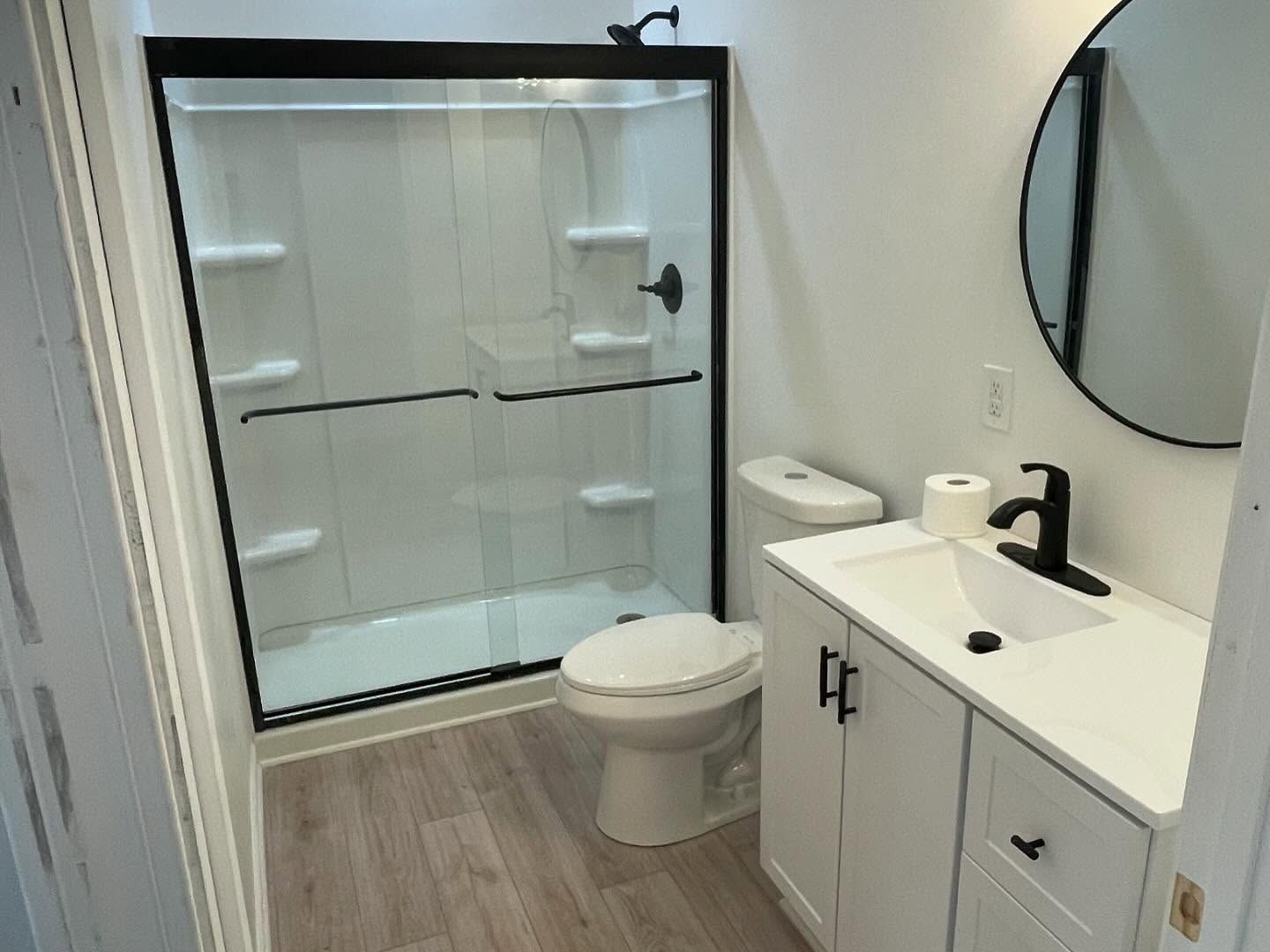
Modern Bathroom Renovations in Taylors, SC, for outdated spaces needing moisture control and updated fixtures
Bathrooms in older homes often show water damage around tub enclosures, outdated tile that traps mold in grout lines, inadequate ventilation that leaves mirrors fogged and walls damp, or cramped layouts where standard vanities block access to shower doors. Servicing Taylors, SC, Anderson, SC, Greenville, SC, Spartanburg, SC, Simpsonville, SC, and Greer, SC, Talon Home Renovations transforms these spaces into functional, modern bathrooms by installing walk-in showers with proper slope and waterproofing membranes, custom vanities sized to fit the room's dimensions, tile selected for moisture resistance and ease of cleaning, and ventilation systems that actually remove humidity before it condenses on surfaces. Projects across Taylors, SC, Anderson, SC, Greenville, SC, Spartanburg, SC, Simpsonville, SC, and Greer, SC, frequently address the specific wear patterns seen in homes built before modern moisture barriers became standard practice.
A full bathroom renovation involves demolishing existing fixtures and tile down to wall studs and subfloor, installing updated plumbing that relocates drains and supply lines to accommodate new layouts, applying waterproof backer board and membranes before any tile goes up, and selecting fixtures that balance style with long-term durability in high-moisture environments. Lighting improvements often include recessed ceiling lights on dimmer switches and vanity-mounted fixtures that eliminate shadows during grooming tasks.
Arrange an on-site evaluation to identify moisture issues, measure the existing space, and discuss fixture options that fit your functional priorities.
What Proper Waterproofing Requires
Tile installation quality depends entirely on the substrate preparation that happens before any tile touches the wall—waterproof membranes must extend beyond the shower pan, seams require overlapping and sealing with manufacturer-approved methods, and backer board needs fastening at intervals close enough to prevent flexing that cracks grout over time. Talon Home Renovations follows these installation standards because shortcuts in waterproofing lead to concealed leaks that rot framing and subfloors, which eventually require tearing out the entire bathroom again within five to seven years.
After renovation completes, you'll notice that showers drain completely without pooling in corners, that exhaust fans clear steam during use rather than leaving condensation on mirrors and windows, and that tile surfaces stay cleaner because properly sealed grout resists mildew growth. Walk-in showers with curbless entries eliminate tripping hazards and make the bathroom more accessible as mobility needs change, while custom vanities provide storage configurations that fit your specific needs rather than forcing you to adapt to stock cabinet layouts.
Bathroom upgrades also contribute measurably to property value, particularly when older homes in the neighborhood still have original pink tile and fiberglass tub surrounds from decades past. Buyers expect at least one fully updated bathroom, and spa-like finishes—frameless glass enclosures, large-format tile, modern fixtures—position your home above comparable listings that show deferred maintenance.
Answers to Frequent Bathroom Renovation Questions
Renovating a bathroom involves decisions about materials, layout changes, and how the work affects daily routines in your home.
What tile works best in shower enclosures?
Large-format porcelain tile reduces grout lines where mold accumulates, textured surfaces provide slip resistance underfoot, and rectified edges allow tighter grout joints that stay cleaner longer than standard ceramic tile with wider spacing.
How does fixture selection affect long-term maintenance?
Pressure-balance shower valves prevent temperature fluctuations when toilets flush or washing machines fill, wall-hung toilets simplify floor cleaning, and widespread faucets allow individual handle replacement without replacing the entire unit.
Why do older bathrooms in Taylors, SC often need subfloor replacement?
Homes built before the 1990s frequently used standard drywall instead of moisture-resistant backer board around tubs and showers, which allows water intrusion that rots the subfloor underneath, requiring removal and replacement with properly treated plywood before new tile installation.
What ventilation improvements actually reduce moisture problems?
Exhaust fans sized to the bathroom's cubic footage and vented directly outside—not into attic spaces—remove humidity effectively, and timer switches ensure the fan runs long enough after showers to clear residual moisture.
How long does a full bathroom renovation take?
Most projects require two to three weeks depending on whether structural repairs are needed, with the most disruptive phase occurring during demolition and rough plumbing when the bathroom is completely non-functional.
Talon Home Renovations completes bathroom transformations using moisture-resistant materials and installation methods that prevent the hidden water damage common in older construction. Contact the team at (864) 520-7193 to schedule a renovation estimate and review layout options that improve both comfort and long-term durability.