
10+
Years Of Experience
Surfaces Built for Daily Traffic and Spills
Hard-Surface Flooring & Custom Tile in Taylors, SC, for homeowners replacing carpet or upgrading to durable, low-maintenance finishes
Hardwood planks that withstand decades of foot traffic without showing wear patterns, luxury vinyl plank that survives water spills near sinks and entryways, and tile installations that remain level across entire rooms represent the difference between flooring that handles real use and surfaces that require replacement within five years. Talon Home Renovations installs hard-surface flooring including solid hardwood, engineered wood, luxury vinyl plank, and custom tile for floors, walls, and staircases throughout Taylors, SC, Anderson, SC, Greenville, SC, Spartanburg, SC, Simpsonville, SC, and Greer, SC. The work excludes carpet entirely, focusing on materials that tolerate moisture, resist scratching, and maintain appearance through cleaning cycles that would destroy softer floor coverings.
Installation addresses the substrate first—subfloors are leveled to within acceptable tolerances before any finish material goes down, because even minor height variations cause tile to crack and vinyl planks to separate at the seams. Tile work includes custom layouts for kitchen backsplashes, bathroom walls, and staircase risers, with careful attention to grout joint width and layout symmetry that distinguish professional installations from those where cuts don't align and patterns fail to center on focal points.
Arrange a flooring consultation to review material options based on your home's traffic patterns and moisture exposure.
What Happens During Professional Hard-Surface Installation
The process starts with removing existing flooring and inspecting the subfloor for bounce, which indicates inadequate joist spacing or damaged sheathing that will cause tile to crack or hardwood to squeak. Underlayment choices vary by material—hardwood requires moisture barriers in humid climates, while tile installations need cement board in wet areas to prevent flexibility that breaks grout joints. Layout planning determines where cuts fall and whether patterns remain symmetrical, decisions made before any adhesive is spread or fasteners are driven.
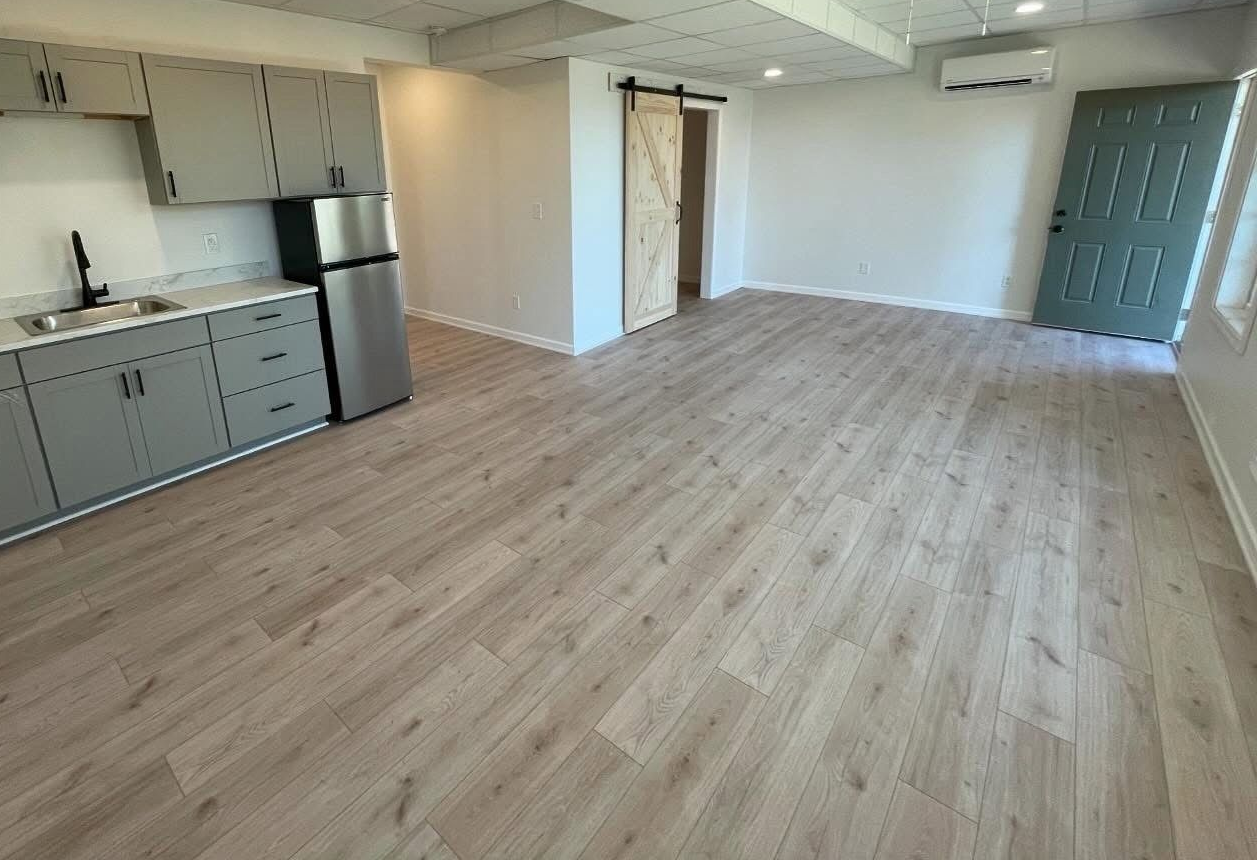
After completion, you'll notice floors that remain silent when walked across, with no squeaks from loose subfloors or hollow sounds indicating poor adhesive coverage beneath tiles. Tile grout lines stay uniform in width throughout the installation, hardwood boards show consistent staining with no light streaks from uneven finish application, and transitions between rooms or material types sit flush without lips that catch feet or vacuum cleaners. Water spills near sinks and exterior doors no longer risk permanent damage because luxury vinyl and tile handle moisture that would buckle traditional hardwood.
Material selection depends on use—solid hardwood for living areas where refinishing may be desired in future decades, luxury vinyl plank for spaces with moisture exposure, and porcelain tile for bathrooms and entries where water contact is frequent. Staircase installations require precise riser and tread measurements to maintain consistent step height, a detail that affects safety and code compliance.
Common Questions About This Service
Homeowners typically want to understand durability differences and installation requirements before selecting finish flooring materials.
What makes luxury vinyl plank different from sheet vinyl?
LVP installs as individual planks with locking edges or adhesive backing, creating a surface that can be partially replaced if damaged, while sheet vinyl requires full-room removal for any repair—LVP also typically includes a thicker wear layer that resists scratching better than economy sheet products.
How do you prevent tile from cracking on wood subfloors?
The subfloor must be stiff enough to prevent deflection under load, which typically means joists spaced no more than 16 inches on center with adequate sheathing thickness, and an uncoupling membrane or cement board layer that absorbs movement between the wood structure and rigid tile surface.
When should hardwood be avoided in favor of engineered or vinyl?
Solid hardwood should not be installed in below-grade spaces, areas with frequent water exposure like laundry rooms, or over concrete slabs without moisture barriers—conditions where engineered wood or luxury vinyl plank handle moisture content that would cause solid hardwood to cup or buckle.
Why does tile installation cost vary significantly between projects?
Simple grid patterns on level floors require straightforward cuts and layout, while diagonal patterns, small mosaic tiles, or rooms with multiple angles demand extensive cutting and layout time—large-format tiles also require flatter subfloors and more leveling compound to prevent lippage at the edges.
What should I look for in finished flooring quality?
Hardwood boards should show consistent stain color with smooth transitions between boards, tile grout lines should maintain uniform width without wandering, and no flooring should sound hollow or flex when walked on.
Talon Home Renovations, servicing Taylors, SC, Anderson, SC, Greenville, SC, Spartanburg, SC, Simpsonville, SC, and Greer, SC, evaluates subfloor conditions and discusses material performance characteristics during initial consultations. Request a project estimate to review flooring options suited to your home's specific conditions and use patterns.